
Something I notice when I'm working with creative professionals: the most articulate, creative people often struggle to communicate their value to clients and funders.
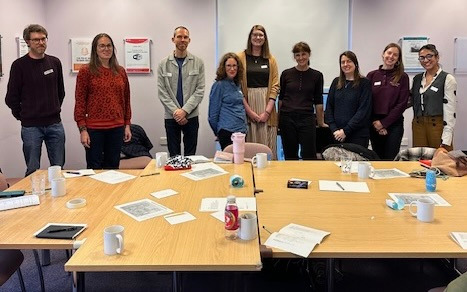
Not because they lack skill. But because they haven't identified their natural communication patterns. And maybe more importantly, because they haven't given themselves permission to adapt those patterns depending on context - without feeling like they're being inauthentic. As a creative person myself, running a creative company for over 15 years, I know. In December I ran a Communication Coaching workshop for North Somerset Council's creative community at Yatton Library. We explored the Voiceprint methodology alongside some marketing psychology principles. What came up in that session - the patterns, the resistances, the relief when people realised they didn't have to become someone else - reinforced things I've been thinking about for a while. I wanted to share some of those reflections here.
"I need to sound more professional" vs. "But I don't want to lose my authentic voice
This tension comes up constantly. As if being professional and being yourself are somehow incompatible
Here's what I've found: your professional voice is your authentic voice - just used more intentionally. It's not about putting on a performance or adopting corporate speak. It's about understanding your natural communication strengths and knowing when to deploy them.
When you understand how you naturally communicate - not just what you say - you can adapt without feeling like you're betraying yourself. You can choose which voice a situation needs, rather than defaulting to whatever comes out when you're nervous or defensive.
At the December workshop, the common thread running through participant feedback was relief. Relief that they didn't have to become someone else. They just needed to understand themselves better.
What happens to your communication when you're under pressure
Your communication style changes when you're stressed. This isn't a character flaw - it's human
In high-stakes moments - difficult stakeholder conversations, funding interviews, presenting under scrutiny - we tend to default to familiar patterns, even when they're not serving us. You might become overly accommodating when you actually need to hold boundaries. Or defensive when curiosity would serve you better. Or you start over-explaining when what's needed is confident brevity.
This is where the Voiceprint pressure profile becomes useful. It shows you what happens to your communication under stress - which voices intensify, which ones you lose access to. Once you recognise your patterns, you can interrupt them.
At the workshop, participants chose focus areas that mattered to them - difficult client conversations, funding applications, managing criticism - and worked through real scenarios. The insight that kept coming up? "I do that!" followed quickly by "I could try this instead."
That moment of recognition - when you see your own pattern - that's where change becomes possible.
Marketing psychology: it's not manipulation (if you don't want it to be)
Most creative professionals I work with are uncomfortable with the 'selling' part. Marketing feels manipulative, or they worry about coming across as pushy.
I get it. I come from a theatre background - 'look at my art!' - and I get quieter and more reflective as I go. This doesn't mean it's your journey or where you want to go. Only you know your purpose. And maybe that's changing. Only you know your purpose at the moment… and if you don't, that's something to work on, since everything starts from that.
But here's what I've learned: when you understand the psychology behind how audiences actually connect with creative content, marketing can stop feeling like manipulation and start feeling like clarity.
You're not tricking people into caring about your work. You're removing the friction between their genuine interest and their decision to engage.
In the workshop we looked at principles like the Halo Effect (one strong positive creates a 'glow' over everything else), Salience Bias (what stands out gets noticed), and Anchoring (the first piece of information shapes how everything else is perceived).
These aren't tricks. They're just how human attention and decision-making work. Understanding them means you can communicate more clearly - and yes, more strategically. Though I can see the need for being 'strategic', I don't particularly like the word myself. By all means use it if it's useful for you. The tools here are about ensuring your purpose (ethical and genuine) finds its best place in the world and how your people - your buyers, your team - can contribute to the world in the best way.
The shift when people realise they can market authentically - that marketing and authenticity aren't opposing forces - is palpable.
Holding models lightly
A note about tools like Voiceprint: I don't follow any model religiously. I am a creative person first and foremost. I pick elements that are most useful, I try to be playful with a model, my aim is to do less and less and choose more carefully.
Personality models I've explored include TA, Person-centred approaches, Non-Violent Communication. Voiceprint is one tool in the toolbox - an excellent one for self-awareness and development, though context is important and it has its limits like any model.
The work is iterative and ongoing for all of us. This kind of tool is something you can keep going back to and learn more from. It's not a one-time assessment that defines you forever.
Taking the next step forward
At the end of the December workshop, each person shared one specific thing they'd do differently. Not grand plans - just one concrete action:
Trying a different voice in next week's difficult meeting. Rewriting their bio using the Halo Effect. Pausing before responding when they feel defensive. Making their best work more visible on their website.
Small changes compound. One better pitch, one clearer bio, one more skilful conversation.
As Nicholas Janni writes in Leader as Healer: "Those who possess emotional maturity do not react, but instead respond. They are able to respond well because they can feel and relate with others. Knowing yourself emotionally helps mitigate against the potential for blaming, mudslinging or other unwelcome outbursts."
These are learnable skills. Practice makes progress, not perfection.
Communication as foundation
Creative businesses often invest heavily in craft, portfolio development, technical skills, project management. All important. But without the ability to articulate your value, navigate stakeholder relationships, and pitch confidently, even brilliant work struggles to find its audience.
Communication skills are the foundation everything else builds on.
That's what made the North Somerset workshop rewarding - watching creative professionals gain communication confidence that allows their work to reach the people who need to see it.
As North Somerset's Economy Team put it in their feedback: participants left with the tools to "find their authentic voice" in professional settings.
Not a new voice. Their voice - used more skillfully.
Elspeth Penny
Founder, 2BU Productions | consultandtrain.co.uk
About this workshop:
This Communication Coaching workshop was delivered for North Somerset Council's Economy Team in December 2025 as part of their support programme for creative professionals. It combined Voiceprint methodology with marketing psychology principles. Thank you Olly and Josyanne, it is brilliant that you can offer these workshops to North Somerset creatives.
Interested in communication coaching for your organisation or creative community?
I work with local authorities, creative sector organisations, and business support programmes. Individual Voiceprint profiling and team workshops available. Get in touch: elspeth@consultandtrain.co.uk
"Elspeth Penny delivered a fantastic Communication Coaching workshop at Yatton Library for North Somerset-based creatives. Elspeth brought the Voiceprint model to life in a way that was both insightful and practical. Participants learned how to adapt their communication styles and explored marketing psychology principles that can transform how creatives connect with audiences. The feedback was overwhelmingly positive, and the session left everyone with clear, actionable steps to improve confidence and clarity in their professional communication. We strongly recommend Elspeth for her expertise in helping creative professionals find their authentic voice."
— Economy Team, North Somerset Council

Finding Your Professional Voice, with
What I've learned about communication, creativity, and the voices we use

Finding Your Professional Voice
What I've learned about communication, creativity, and the voices we use
2/10/20265 min read